
Key Takeaways
- 43% of companies have already priced expected AI productivity into sales quotas, according to CaptivateIQ's survey of 200 incentive compensation professionals.
- Every one of 500 U.S. revenue leaders in Salesloft's 2026 benchmark uses AI, but only 20.6% describe their AI strategy as production-ready with measurable outcomes.
- Just 48% of account executives hit annual quota in 2026, down from 51% in 2024, while the median quota-to-OTE ratio climbed to 4.6x.
- Only about 32% of revenue leaders can instantly diagnose why a deal has stalled, and 55.6% say their CRM data rests mostly on subjective seller reporting.
Every planning cycle has a number that everyone agrees to believe. This year it is the AI productivity dividend. The logic sounds airtight on a spreadsheet: if AI tools give every rep back a few hours a week, those hours should turn into pipeline, and the quota should rise to match. The problem is that a growing share of companies have already booked that dividend into their targets, while the evidence that their reps are actually collecting it remains thin. Revenue leaders are, in effect, asking the sales floor to pay back a loan the business has not yet received.
The Premium Arrived Before the Productivity
CaptivateIQ's 2026 State of Incentive Compensation report, based on 200 incentive compensation professionals at mid- to large-sized companies, found that 43% have already priced AI productivity into sales quotas. The same study found 81% of companies use AI in some capacity, but only 28% use it extensively. That 53-point gap is the heart of the problem. The mechanism CaptivateIQ describes is simple: if AI saves each rep five hours a week, that is roughly 12% more selling time, so the quota goes up. Sometimes the increase is labeled as an AI adjustment. More often it is folded quietly into a larger number with no explanation attached.
The trouble is what kind of AI most teams are actually running. Email drafting, CRM cleanup, and call summaries are real conveniences, but they are the baseline now, not a competitive edge. The capabilities that would justify a higher target, such as surfacing which deals to prioritize or spotting the behavior patterns behind won business, are far less common. Rosalyn Santa Elena, founder of RevOps Collective, framed the threshold in the report: "having the right insights is what's going to enable you to be that thought partner, the person who can actually guide the business."
Salesloft's 2026 Revenue Benchmark Report, released September 2 and drawn from 500 U.S. sales and revenue decision-makers, confirms the gap from the other side. Every respondent reported using AI somewhere in the revenue process. Only 20.6% described their AI strategy as production-ready with measurable outcomes, and 28.2% are still experimenting. Meanwhile 68.4% of leaders reported higher pipeline quotas. Targets are being set for the one-in-five, and applied to everyone.
"Revenue teams don't have an AI access problem anymore. The bigger question is what they're getting from it." – Steve Cox, CEO, Salesloft
The Floor Is Already Straining
Raising the bar would be defensible if reps were comfortably clearing it. They are not. The Bridge Group's 2026 AE research, published in June and covering 158 B2B companies, found that 48% of reps achieved annual quota, down from 51% in 2024. The median quota reached $960,000 and the quota-to-OTE ratio rose to 4.6x from 4.2x, meaning each dollar of pay now carries more expected revenue. Ramp time stretched to 6.2 months, the longest in the study's history, and near-majorities of companies reported more stakeholders, longer cycles, heavier discounting pressure, and more deal slippage than a year earlier.
Bridge Group's data also shows why the AI assumption is tempting. Organizations in the top third of its AI Engagement Score had 57% of reps at quota, against 39% in the bottom third. That is a real and meaningful spread. But it describes companies that have embedded AI deeply into how their reps work, not companies that bought licenses and raised the number. Applying a top-tercile uplift to a bottom-tercile team is how a planning assumption turns into a missed year.
The reps themselves are telling leaders where the gap sits. In CaptivateIQ's separate 2026 State of Sales survey of 500 U.S. sales professionals, 81% said they use AI for at least some selling activities and 71% of those users said it improved their productivity. Yet 26% called their tools too basic, 22% said they do not trust the accuracy, and 20% said they lacked proper training. Nine in ten reported obstacles to hitting their targets, and 42% said they waited a month or more into the fiscal year to receive them at all.
You Cannot Price What You Cannot Measure
The deeper issue is that most revenue organizations lack the instrumentation to know whether AI is lifting performance or not. In the Salesloft study, only about 32% of leaders said they can instantly diagnose why a deal has stalled, 41% are slow to find the cause or lack visibility, and 27% can see win and loss rates but cannot explain what happened between stages. Although 84% said loss reasons are captured often or always, 55.6% admitted the information entered into CRM is based mostly on subjective seller reporting. The top 10% of sellers generate 47.4% of closed-won revenue, and average quota attainment sits at roughly 62%, which suggests the productivity story is concentrated in a small group rather than spread across the team.
The measurement gap is not unique to software. Phocas's State of Sales in Distribution 2026 report, released September 22 and based on more than 100 wholesale distributors, found that 49% already use AI for selling, yet 39% do not track forecast accuracy, 32% do not measure win rates on existing accounts, and 34% do not measure them on new business. A company that does not know its win rate before AI cannot credibly claim AI has improved it, let alone set a target on that basis.
The CRO Playbook for an Honest AI Quota
- Separate the AI adjustment from the base quota. If a target includes an assumed productivity gain, name it, size it, and document it so it can be tested and reversed rather than buried in a larger number.
- Earn the uplift before you bank it. Tie any AI-based increase to observed changes in selling time, pipeline created, or stage conversion from a pilot group, not to vendor claims or license counts.
- Invest in the workflows that justify a higher bar. Deal prioritization, opportunity scoring, and disciplined qualification move win rates. Email drafting and call summaries do not, and should not carry quota weight.
- Close the training gap first. With one in five AI users saying they were never properly trained, structured practice and coaching on the new workflow is a precondition for any productivity target.
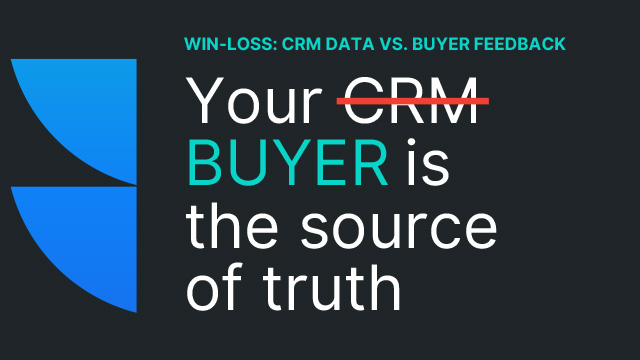
- Replace self-reported loss reasons with buyer evidence. When more than half of CRM data is subjective, direct buyer interviews are the only reliable baseline for proving that AI changed outcomes.
- Revisit mid-year, in both directions. Build a formal checkpoint where AI assumptions are compared with actual attainment, and adjust the target down as readily as up.
AI will almost certainly make good sales teams more productive. The question for revenue leaders is whether they will let that productivity show up in the numbers first, or keep charging reps for it in advance. In a year when fewer than half of AEs are reaching quota, the cost of guessing wrong falls on the people the business can least afford to lose.